
How to Humanize AI Content Without Losing the Facts
Humanizing an AI draft should improve clarity and rhythm, not distort the meaning. Here is a practical editing method.
Updated
- Human editing
- Fact-checking
- AI drafts
Put the Workflow Into Practice
Try your own draft: paste at least 10 words, compare the rewrite, and check every fact. 250 free humanizer words per day, without an account.
AI HumanizerHumanizing AI content is not the same as decorating it. The goal is to keep the facts stable while making the writing sound like a real person shaped the argument. That requires a different process from simple paraphrasing and a deliberate editorial review.
Use the fact-checking checklist and claim log to record evidence, qualifiers, corrections, and unresolved claims before approving a rewrite.
When that protected list is ready, use the AI Humanizer on one section at a time. Treat the output as a proposed edit, not as confirmation that the facts survived.
Lock the meaning first
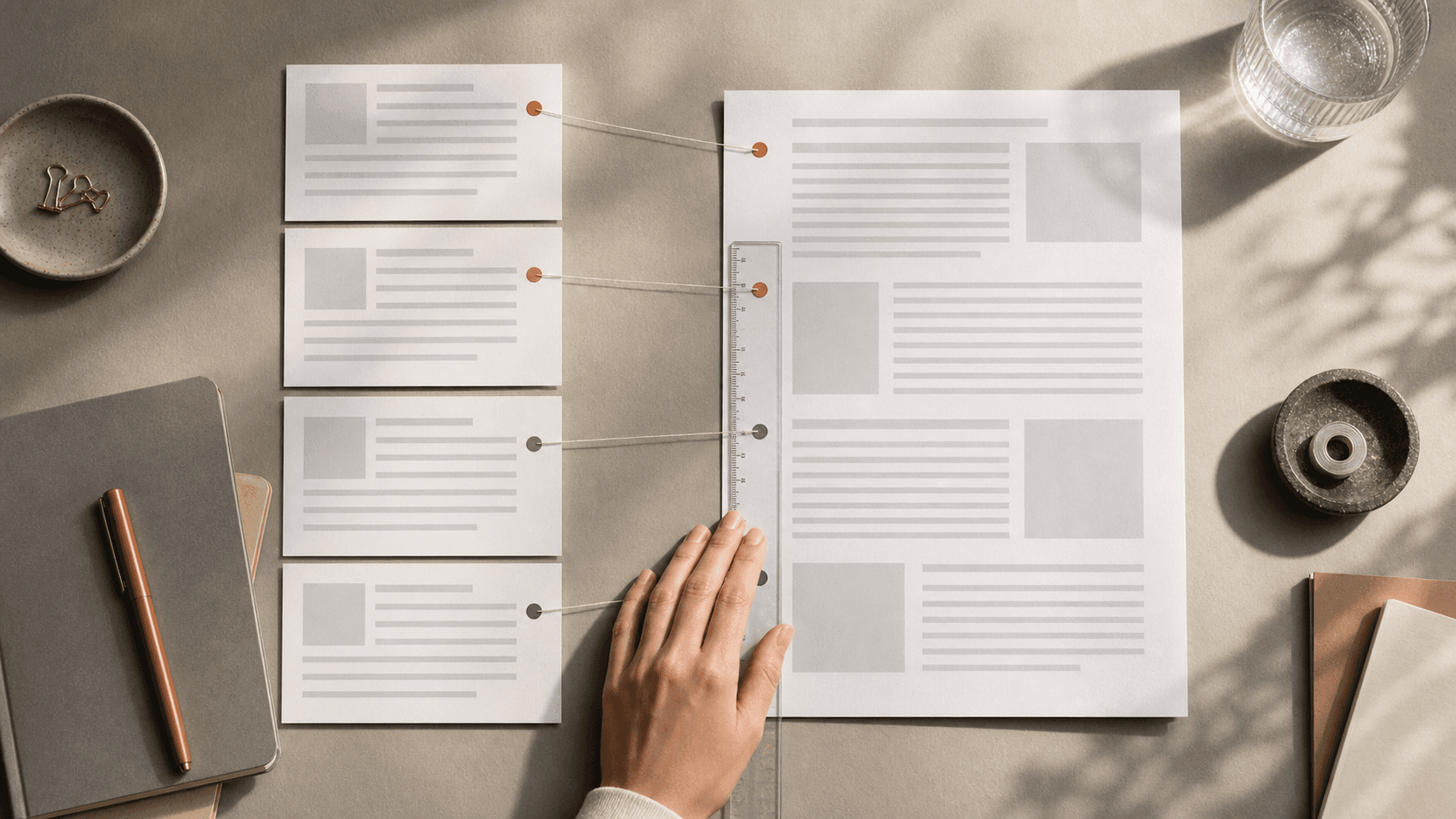
Before rewriting, identify the statements that cannot change. These include product details, pricing, legal language, statistics, research findings, and quoted customer language. Put those facts in a short list and compare the revised draft against it.
If the rewrite changes a number, softens a guarantee, or adds a claim that was not in the source, reject that sentence. Good humanization protects meaning while improving delivery.
Build a claim checklist
Copy every material claim into a short table or note. Record the original wording, the source, and the amount of flexibility allowed. A product name may allow no variation. A descriptive transition may allow substantial rewriting. Review the high-risk claims first so a polished style does not distract from a factual change.
For long documents, compare the source and revision section by section. Automated difference tools can reveal changed numbers and names, but a person still needs to judge whether a qualification, causal link, or recommendation shifted.
Replace generic rhythm
AI drafts often follow the same pattern: topic sentence, explanation, benefit, transition. That structure is safe, but it becomes tiring. Human writing usually has more movement. It uses short emphasis, longer explanation, occasional contrast, and sharper verbs.
For example, "This solution can help teams improve productivity" is weaker than "Teams save time when the review steps are visible." The second sentence is more concrete and easier to trust.
Concrete writing still needs evidence. If you have not measured time savings, describe the workflow benefit without inventing a result: "Visible review steps help teams see what remains." Precision is more trustworthy than unsupported certainty.
Keep terminology consistent
Humanized content can become messy if every repeated term is replaced with a synonym. In technical or product writing, consistency matters. Do not replace "AI detector" with five different labels just to create variety. Vary sentence structure instead of changing important terms.
This is especially important for SEO pages, onboarding guides, and help-center articles where readers need stable vocabulary.
Create a protected-terms list before using an AI Humanizer. Include brand names, feature labels, legal terms, keywords that genuinely help readers find the page, and technical phrases that should not be replaced by loose synonyms.
Add the missing human context
Most AI drafts explain what a topic is. Strong articles explain when it matters. Add context such as tradeoffs, mistakes, exceptions, and decision criteria. These details make the piece feel written by someone who has handled the problem in practice.
Useful additions include:
- A common bad workflow and why it fails.
- A small example from a real content review.
- A warning about where automation should stop.
- A clear recommendation for the next step.
Distinguish fact from judgment
Use direct language to show the difference. "The documentation states" points to a source. "In our review" describes an observation. "We recommend" identifies editorial judgment. These signals help readers evaluate a passage without mistaking an opinion for a measured result.
When an external fact matters, link to the primary source. The NIST Generative AI Profile, for example, provides a risk-management frame; it should not be stretched into a product endorsement or a guarantee about one workflow.
Review the final shape
After humanizing, read the piece aloud. If every paragraph has the same length and pace, revise again. If the article sounds casual but less precise, tighten it. Human writing should feel natural and controlled at the same time.
Use a readability score to identify dense sentences, then inspect the passage itself. A score can flag friction, but it cannot confirm factual accuracy, suitable tone, or compliance with a school, employer, or publisher policy.
Accuracy is the finish line
The best result is not "undetectable" as a trick. It is clear, accurate writing that reflects accountable editorial choices. Keep the source, the final claim checklist, and any required AI disclosure together so a future reviewer can understand how the page was produced and update it when the facts change.
Sources & Further Reading
Frequently Asked Questions
What facts should be locked before a rewrite?
Protect names, dates, numbers, quotations, citations, product details, legal language, and any condition that changes the meaning of a recommendation.
Does natural-sounding text prove human authorship?
No. Writing style and detector scores cannot establish who wrote a passage. Evaluate accuracy, evidence, disclosure, and the applicable policy instead.
How can I compare a rewrite with the source efficiently?
Use a claim checklist or side-by-side review, checking each material statement before spending time on tone and sentence rhythm.
Put the Workflow Into Practice
Use GPTHuman as an editing aid, then verify facts, sources, meaning, and policy requirements before publishing.
AI Humanizer